Music
‘Homesteaders’ album is now out!
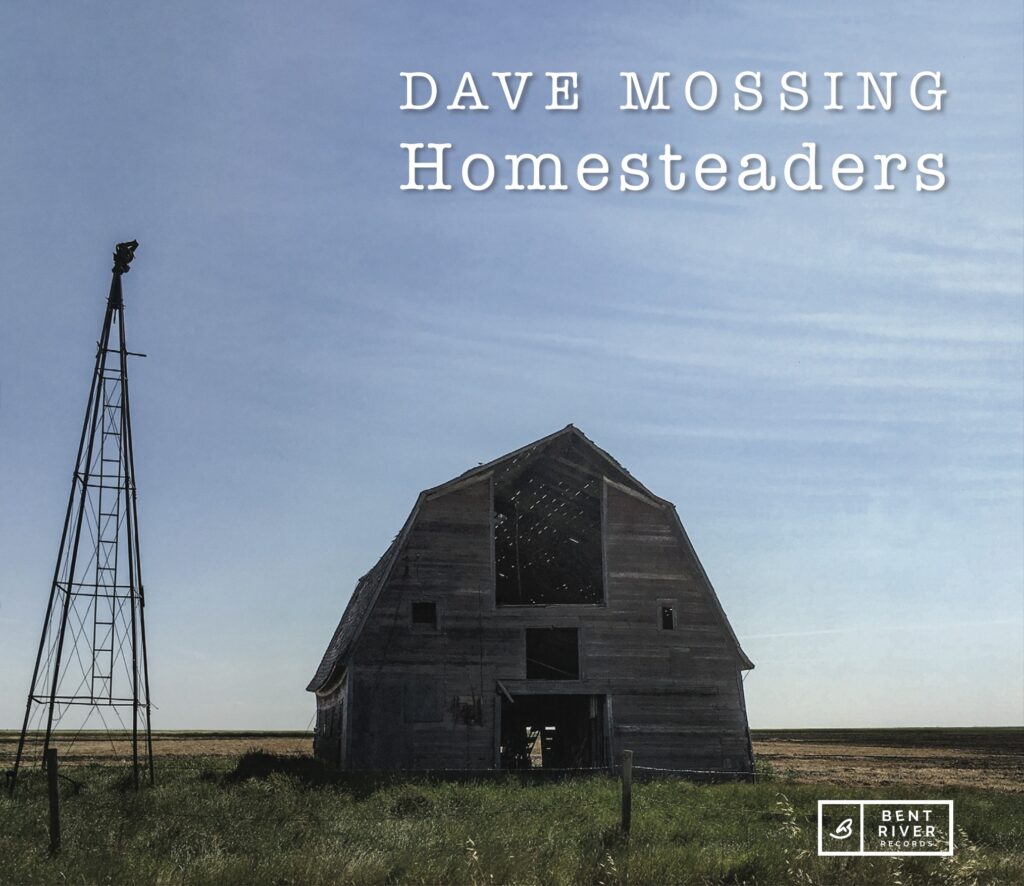
In the early 1900’s the government was giving away farm land on the Canadian prairies to encourage settlement and agricultural development. Many people from around the world immigrated to the region to take advantage of this opportunity including some of the Mossing family. They helped to establish and shape their southern Saskatchewan farming community, contributing their devotion to the church and their love of music. Having not visited the area since my grandparents moved away, my wife and I decided to take a day trip to see what remained of their lives. A few years later I looked back at the photos we took and reflected upon the places we visited along with the memories of the family that lived there. This inspired me to pay homage to these people and their story.
The Homesteaders Suite is a portrait of the lives of these family members that came to Canada. It pays tribute to three of the major landmarks that we visited on our trip, all of which were important places in their lives. The farm, the church and the cemetery take us from the beginning to the end of their lives as homesteaders. This suite is meant to tell that story.
The first track, Homesteaders, is the arrival and settlement of these families. I wanted to create a mood that represented the mystery of what was to come, and the dream of what kind of a farm life that they would create. There was just a piece of land awaiting them, or a blank canvas so to speak. There were no houses and in the first years many built and lived in sod houses until they could construct more permanent structures. Over the years the homestead evolved, grew, and got passed down to my grandfather. It eventually got sold and all that is left now is a decrepit barn and windmill, but somehow it still felt familiar as if their spirits were still there.
The Interludes are all improvised. They are meant to be connective material that transition us from one part of the story to the next.. I love moments like these because the spontaneity and the creativity of each musician is brought to the forefront. Everyone did a great job of capturing the spirit and creating the perfect mood to take us from one movement to the next.
The people of St-Olaf’s Lutheran church for many years did not have a permanent home of their own. However, this did not stop them from congregating. Many years later they were finally able to move into a church of their own and it happened to be up the road from the Mossing farm. This was the first piece of the project that I wrote. Seeing what was left of the country church and reflecting upon what it once represented made me reminisce about the times that I attended with my family. What I remember the most was seeing my grandfather playing the organ, as he did every Sunday. He was a farmer, organist/pianist, and music teacher, and he was always proud to share music with us. I wanted this piece to be inspired by church hymns but staying somewhat in the jazz tradition, which isn’t always that far apart! So, in tribute to the church and in loving memory of my grandfather Oliver Joseph Mossing, St-Olaf was written.
St-Olaf Cemetery was not a place that I visited often but I remember being there for my Great Grandfather’s funeral(he was one of the original Homesteaders). Being in the middle of the countryside, it is now largely unkept. Seeing the names of family members and their friends from the congregation made me stop to reflect. With the church closed and falling apart along with the buildings on the Mossing farm, the life that these Homesteaders knew is no more. I wanted to create a funeral march in memory of their lives and their story, and it is simply called Dirge.
From What You Have Given is a song of gratitude. Because of the lives that they lived and the things that they passed down through the generations I was able to have a life rich in music and tradition. It is always interesting to think of one’s lineage and wonder what impact that has had on our own lives. Hopefully I am doing them justice by keeping the music playing and passing some of these values on to my own family.
Since this record came out of a day trip, I wanted to write something that captured the spirit of that day. I had vivid memories of the places that we were about to visit and an idea of where everything was, but wasn’t sure how accurate those were and what would even be left. Although much of what I was looking for was falling apart, the major landmarks were still there. The day was filled with excitement, wonder, happiness and melancholy. It turned out to be an even more impactful trip than I realized at the time and I am happy to have shared it with my wife. Day Trip was born and it is a day I will never forget.
Grace was my grandmother. Of Irish descent, she was surrounded by a bunch of Norwegians but she was a woman of faith so she fit in perfectly. She had a great sense of humour and was quick witted! Having written a tune with my grandfather in mind she would have wanted one for herself, and she would have told me as much! So, this is for one of my favourite ladies ever.
Big Muddy is inspired by the Big Muddy Badlands, a region which spans the Saskatchewan and Montana border. Because of the vast nothingness of the region it was hard to police, and became an area where outlaws would seek refuge and safe passage. The landscape of the area along with it’s history reminds me of the wild west and I wanted to write a piece that would reflect upon this.
Kindred is the only composition in this project that existed previously. Inspired by the love for my own little family, it has always been a piece that I have found easy to get into the spirit of. I thought that it would be a fitting end to the album, representing the continuance of life of the Homesteaders.
Special thanks to Jean-Michel, Ira, and Jim for all of your passion and creativity that helped make this music go beyond where I could have ever imagined. Thanks to my good friend Paul Johnston for taking on this project and bringing not only his exquisite sonic capturing talents, but his musicianship and willingness to help me get this off the ground. Thanks to my parents for all of your support over the years, and for passing on the talents and traditions of the Homesteaders to your children. And lastly to my own little family; my girls are always in my heart and are a constant source of inspiration. This labour of love took a lot of time, energy and thought and would never have happened without the loving support of my wife. Thank you, Val, for affording me the time and space to make this happen.
Lastly, this project was made possible by the support of Le Conseil des Arts et des Lettres du Québec. I am very fortunate to have had my project chosen for financial support and only wish that there was much more to go around as there are so many deserving artists in our community. Thanks!
———————————————————————————————————————-
Au début des années 1900, le gouvernement cédait des terres agricoles dans les prairies canadiennes pour encourager la colonisation et le développement agricole. De nombreuses personnes du monde entier ont immigré dans la région pour profiter de cette opportunité, y compris certains membres de la famille Mossing. Ils ont aidé à établir et à façonner leur communauté agricole du sud de la Saskatchewan, apportant leur dévouement à l’église et leur amour de la musique. N’ayant pas visité la région depuis que mes grands-parents avaient déménagé, ma femme et moi avons décidé de faire une excursion d’une journée pour voir ce qui restait de leur vie. Quelques années plus tard, j’ai regardé les photos que nous avions prises et réfléchi aux endroits que nous avions visités ainsi qu’aux souvenirs de la famille qui y a vécu. Cela m’a inspiré à rendre hommage à ces personnes et à leur histoire.
La suite Homesteaders est un portrait de la vie de ces membres de la famille qui sont venus au Canada. Il rend hommage à trois des principaux sites que nous avons visités lors de notre voyage, qui étaient tous des lieux importants dans leur vie. La ferme, l’église et le cimetière nous emmènent du début à la fin de leur vie en tant que colons. Cette suite est destinée à raconter cette histoire.
La première pièce, Homesteaders, est l’arrivée et l’établissement de ces familles. Je voulais créer une ambiance qui représentait le mystère de ce qui allait arriver, et le rêve de la vie à la ferme qu’ils allaient créer. Il n’y avait qu’un morceau de terre qui les attendait, ou une toile vierge pour ainsi dire. Il n’y avait pas de maisons et dans les premières années, beaucoup ont construit et vécu dans des maisons de terre jusqu’à ce qu’ils puissent construire des structures plus permanentes. Au fil des ans, la propriété a évolué, grandi et été transmise à mon grand-père. Tout a finalement été vendu et tout ce qui reste maintenant est une grange en décrépitude et un moulin à vent, mais d’une certaine manière, cela semblait toujours familier comme si leurs esprits étaient encore là.
Les Interludes sont tous improvisés. Ils sont censés être un matériau connectif qui nous fait passer d’une partie de l’histoire à la suivante. J’aime des moments comme ceux-ci parce que la spontanéité et la créativité de chaque musicien est mise de l’ avant. Tout le monde a fait un excellent travail pour capturer l’esprit et créer l’ambiance parfaite pour nous emmener d’un mouvement à l’autre.
Les habitants de l’église luthérienne de St-Olaf n’ont pas eu leur propre lieu sacré permanent pendant de nombreuses années. Cependant, cela ne les a pas empêchés de se rassembler. De nombreuses années plus tard, ils ont enfin pu emménager dans leur propre église et il se trouve que c’était sur la route depuis la ferme des Mossing. C’était le premier élément du projet que j’ai écrit. Voir ce qui restait de l’église de campagne et réfléchir à ce qu’elle représentait autrefois m’a fait me remémorer les moments auxquels j’ai participé avec ma famille. Ce dont je me souviens le plus, c’était de voir mon grand-père jouer de l’orgue, comme il le faisait tous les dimanches. Il était agriculteur, organiste/pianiste et professeur de musique, et il a toujours été fier de partager sa musique avec nous. Je voulais que cette pièce soit inspirée par les hymnes de l’église mais en restant tout de même dans la tradition du jazz, qui n’est pas toujours si éloignée ! Ainsi, en hommage à l’église et à la mémoire aimante de mon grand-père Oliver Joseph Mossing, St-Olaf a été écrit.
Le cimetière St-Olaf n’était pas un endroit que je visitais souvent, mais je me souviens d’avoir assisté aux funérailles de mon arrière-grand-père, un des premiers colons. Étant au milieu de la campagne, il est maintenant en grande partie abandonné. Voir les noms des membres de la famille et leurs amis de la congrégation m’a fait arrêter pour réfléchir. Avec l’église fermée et en ruine, ainsi que les bâtiments abandonnés sur la ferme des Mossing, la vie que ces Homesteaders connaissaient n’est plus. Je voulais créer une marche funèbre à la mémoire de leur vie et de leur histoire, et elle s’appelle simplement Dirge.
From What You Have Given est une chanson de gratitude. En raison des vies qu’ils ont vécues et des choses qu’ils ont transmises de génération en génération, j’ai pu avoir une vie riche en musique et en tradition. Il est toujours intéressant de penser à ses ancêtres et de se demander quel impact ils ont eu sur nos propres vies. J’espère leur rendre justice en gardant la musique et en transmettant certaines de ces valeurs à ma propre famille.
Puisque ce disque est sorti d’une excursion d’une journée, je voulais écrire quelque chose qui capture l’esprit de cette journée. J’avais des souvenirs vifs des endroits que nous étions sur le point de visiter et une idée de l’endroit où tout était, mais je n’étais pas sûr à quel point ceux-ci étaient précis et ce qui même resterait. Bien qu’une grande partie de ce que je cherchais s’effondrait, les principaux repères étaient toujours là. La journée a été remplie d’excitation, d’émerveillement, de bonheur et de mélancolie. Cela s’est avéré être un voyage encore plus impactant que je ne l’avais réalisé à l’époque et je suis heureux de l’avoir partagé avec ma femme. Day Trip est né et c’est un jour que je n’oublierai jamais.
Grace était ma grand-mère. D’origine irlandaise, elle était entourée d’un groupe de Norvégiens mais c’était une femme de foi donc elle s’intégrait parfaitement. Elle avait un grand sens de l’humour et était rapide d’esprit ! Ayant écrit un air en pensant à mon grand-père, elle en aurait voulu un pour elle, et elle me l’aurait laissé savoir! Alors celle-ci est pour l’une de mes dames préférées.
Big Muddy s’inspire des Big Muddy Badlands, une région qui s’étend sur la frontière entre la Saskatchewan et le Montana. En raison de l’immensité de la région, il était difficile de patrouiller ce territoire et c’est devenu une zone où les hors-la-loi cherchaient refuge et passage sûr. Le paysage de la région ainsi que son histoire me rappellent l’Ouest sauvage et je voulais écrire une pièce qui reproduirait cette ambiance.
Kindred est la seule composition de ce projet qui existait auparavant. Inspirée par l’amour pour ma propre petite famille, elle a toujours été une pièce dans laquelle j’ai de la facilité à m’exprimer. J’ai pensé que ce serait une fin appropriée pour l’album, représentant la continuation de la vie des Homesteaders.
Un grand merci à Jean-Michel, Ira et Jim pour votre passion et votre créativité qui ont aidé cette musique à aller au-delà de ce que j’aurais pu imaginer. Merci à mon bon ami Paul Johnston d’avoir pris en charge ce projet et d’apporter non seulement ses talents exquis de capture sonore, mais aussi sa musicalité et sa volonté de m’aider à faire décoller le tout. Merci à mes parents pour tout votre soutien au fil des ans, et pour transmettre les talents et traditions des Homesteaders à vos enfants. Et enfin à ma propre petite famille ; mes filles sont toujours dans mon cœur et sont une source constante d’inspiration. Ce travail d’amour a pris beaucoup de temps, d’énergie et de réflexion et ne se serait jamais produit sans le soutien aimant de ma femme. Merci, Val, de m’accorder le temps et l’espace nécessaires pour y arriver.
Enfin, ce projet a été rendu possible grâce au soutien du Conseil des Arts et des Lettres du Québec. Je suis très chanceux que mon projet ait été choisi pour un soutien financier et j’aimerais seulement qu’il y ait beaucoup plus à distribuer car il y a tellement d’artistes méritants dans notre communauté. Merci !